

Content Guide
Servicing your hybrid car
Whether you’re new to hybrid cars or already a pro, you know it’s important to keep them in tip top shape. This guide explains what goes into servicing a hybrid car and why regular checks are key.
What does a hybrid car service involve?
- Safety features
- Brakes: Checking the condition and performance of your braking system, including regenerative braking components commonly used in hybrid vehicles.
- Lights: Testing all exterior and interior lights, indicators and warning signals to help ensure your vehicle remains safe and road legal.
- Engine and hybrid system checks
- Engine inspection: Checking key engine components for signs of wear, damage or leaks, helping to ensure the petrol engine continues to work efficiently alongside the electric motor.
- Fluid levels: Inspecting essential fluids and topping them up where required, in line with manufacturer recommendations.
- Electrical systems
- Hybrid battery: Visually inspecting the high-voltage battery and associated components for signs of damage or deterioration.
- Charging equipment: Checking the condition of charging cables, connectors and charging ports where fitted.
- Electrical components: Inspecting visible wiring, connections and high-voltage system components to help identify signs of wear or damage.
- HVAC and battery cooling system
- Heating and cooling performance: Testing the HVAC system to ensure it is operating efficiently and providing effective cabin comfort.
- Battery cooling support: Inspecting key cooling system components that help regulate battery temperature, supporting battery performance, efficiency and longevity.
Key differences in a hybrid car service?
Hybrid cars are different from regular petrol or diesel cars because they use both a conventional petrol engine and an electric motor. This means servicing them requires specialist knowledge and additional checks. Here's what makes hybrid car servicing unique:
- Dual engine system
- Hybrid vehicles combine a petrol engine with an electric motor, and both systems need to work together efficiently. During a service, technicians check key components across both power sources to help maintain performance, fuel efficiency and reliability.
- Battery maintenance
- Hybrid batteries and their supporting systems require specialist checks that aren't needed on conventional vehicles. This can include inspecting battery cooling components, checking the condition of high-voltage electrical connections and looking for signs of wear or damage that could affect battery performance and efficiency.
- Regenerative braking
- Hybrid vehicles use regenerative braking technology, which helps recover energy during braking and sends it back to the battery. This system should be checked as part of a hybrid service to help maintain efficiency and performance.
- Because regenerative braking helps slow the vehicle, it can reduce the amount of work carried out by the conventional braking system, potentially leading to less brake wear over time.
Understanding these differences helps make sure your hybrid gets the right service to perform at its best.
Plug In hybrid vs petrol hybrid
Plug-in hybrid (PHEVs) cars and petrol hybrid cars both use a petrol engine and an electric motor, but there are some important differences in how they operate. Here's what sets them apart:
Battery charging
- Plug-in hybrids have a larger battery that can be charged using a home charger or public charging point. Petrol hybrids do not need to be plugged in, as their battery is recharged automatically through regenerative braking and the petrol engine.
Electric driving range
- Plug-in hybrids can usually travel much further using electric power alone before the petrol engine is needed. Petrol hybrids can drive on electric power for short distances, but the petrol engine does most of the work during everyday driving.
Fuel efficiency
- Plug-in hybrids can offer greater fuel savings when charged regularly, particularly on shorter journeys where more driving can be completed using electric power. Petrol hybrids are also more fuel-efficient than conventional petrol cars, but they generally rely on the petrol engine more often than plug-in hybrids.
Hybrid service cost
The cost of servicing a hybrid car can vary based on:
- Service type
- Basic checks cost less, while a full service that includes detailed checks of the electric system might cost more
- Vehicle condition
- Older hybrids or those needing more repairs might incur higher costs
- Battery condition
- The state of the battery can influence the cost, as battery issues are more complex to address
- Location and garage
- Costs can also vary depending on where you live and which service provider you choose
Keeping up with regular servicing helps avoid more expensive repairs later. It’s an investment in your car’s future health.
How often should I service my hybrid car?
Regular servicing is crucial to keep your hybrid car performing well. Here’s how to know when it’s time for a service:
- Manufacturer’s guidelines
- Always follow the service intervals recommended in your car’s manual. These are often based on mileage or time, whichever comes first
- Annual checks
- Even if you don’t drive much, a yearly check is important to maintain the health of the battery and electrical systems
- Performance issues
- If you notice any changes in how your car drives, such as reduced fuel efficiency or strange noises, it might be time for a check-up
Sticking to these guidelines helps make sure your hybrid runs efficiently and lasts longer. It’s important to remember that different garages and mechanics may carry out slightly different checks than what is mentioned above. You should speak with your mechanic about what they will be doing.
Hybrid car battery servicing and lifespan
How long does a hybrid battery last?
One of the most common questions about hybrid cars is how long the battery will last. Most hybrid batteries are built to last for years, but their lifespan can vary depending on driving habits and maintenance.
Typical lifespan
- Most hybrid batteries last between six and ten years, with many continuing to perform well for longer.
Performance over time
- Battery efficiency can gradually reduce with age, which may affect fuel economy and electric-only driving range.
Replacement costs
- The cost of replacing a hybrid battery varies by vehicle, but regular servicing can help identify issues early and extend battery life.
If you're considering a hybrid, it's also worth comparing plug-in hybrids and self-charging hybrids, as battery size, charging requirements and running costs can differ between models.
Why choose the RAC for a hybrid service?
At the RAC, we've got over 125 years' experience helping UK drivers. That's why we offer hybrid servicing through our RAC Approved Garages and RAC Mobile Mechanics, giving you the flexibility to choose the option that works best for you and complete peace of mind every step of the way. Our mobile mechanics have the expertise and experience to service hybrid vehicles safely and efficiently, with specialist knowledge of both the petrol and electric systems that power your vehicle, including batteries, charging components and electrical systems. We also use quality parts backed by warranty, helping to give you confidence that your hybrid is in safe hands.
Plus, with RAC Mobile Mechanics, you can avoid the hassle of taking your vehicle to a garage. They can carry out full and interim services on your driveway, so you don't even need to leave the house. RAC services are backed by our MOT Fee Guarantee. If you get an MOT within 30 days of your service, and you fail over something we've checked, we'll refund your test fee †.
Our top pick
RAC Mobile Mechanic
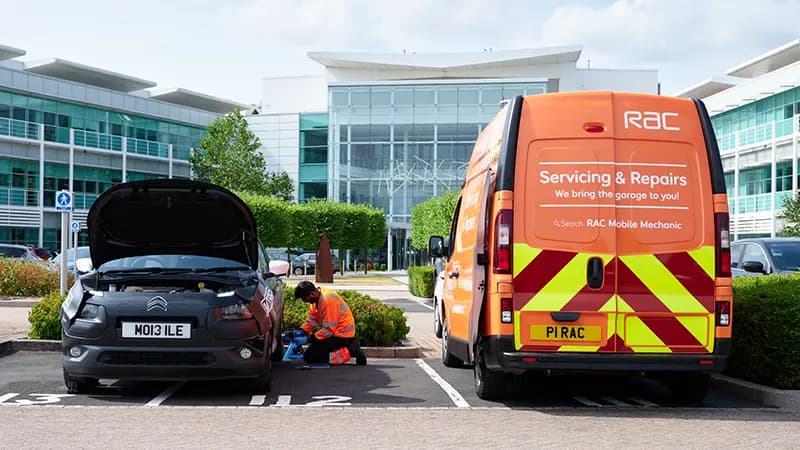
At the RAC, we’ve got over 125 years’ experience in offering complete peace of mind® to our members. We’re best known for our breakdown service. And now – our new RAC Mobile Mechanics are here to help make every day motoring more convenient and easier. If you need a service or repair, they’ll come to you at your home or work.

You pass, or we pay†
Get a service from RAC Mobile Mechanics at home. We're so confident in the quality of our work, that if you fail your MOT within 30 days, over something we've checked, we'll refund you the price of your test.†

Full hybrid service
A comprehensive set of checks to make sure your vehicle is safe and working correctly. We'll also do a visual inspection of your high voltage components for damage. ^^T&Cs apply. Ends 26/10/26.
Interim hybrid service
A series of checks to keep your car running smoothly between full services. A visual inspection of your high voltage components will also be carried out. ^^T&Cs apply. Ends 26/10/26.
Frequently Asked Questions on hybrid vehicle service
Yes, hybrid cars need a special service. They have both a petrol or diesel engine and an electric motor, so a service must cover both systems. Special equipment and trained mechanics are needed to properly work on these vehicles.
Yes, hybrid cars need a regular service just like petrol and diesel cars. Routine maintenance and checks help ensure that all parts of the car are in good condition. It can also prevent future issues and keep your car running smoothly.
Signs your hybrid vehicle needs a service include unusual noises from the engine or motor, decreased fuel efficiency, warning lights on the dashboard, and reduced battery performance. Regular checks can catch these issues early.
Not all garages have the right tools to service hybrid vehicles. It's best to take your hybrid to a garage with mechanics trained to work on hybrid cars and the right tools to handle both the engine and electric motor.
Yes, we can! However, it’s important to note that our mobile mechanic services don’t include a health check or efficiency test on the hybrid battery.
Our RAC Mobile Mechanic full service includes a diagnostic check that picks up most faults. But if you want a battery health check or efficiency test completed, we’d recommend booking a hybrid car service with one of our local approved garages.